
The global energy chessboard just moved again.
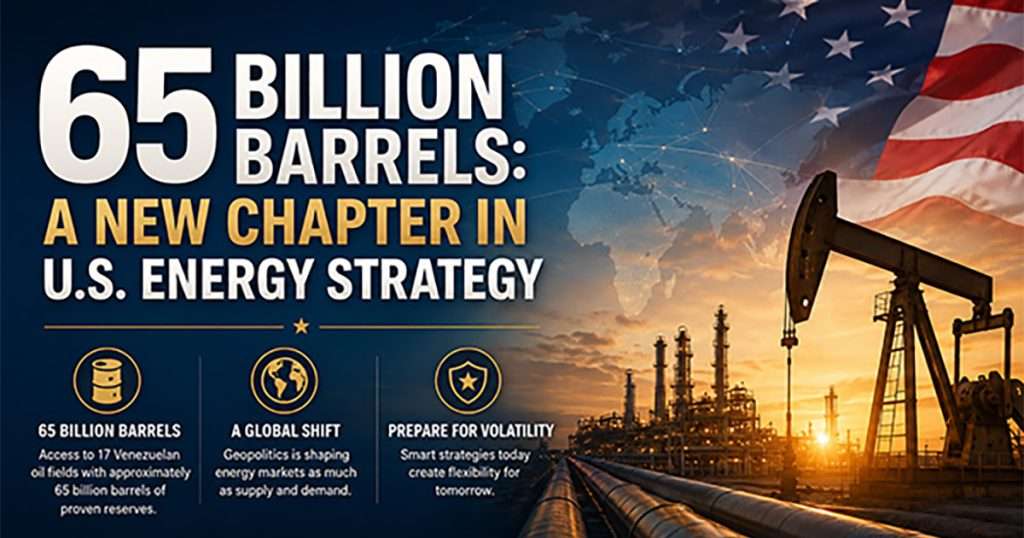
The United States has announced a historic oil agreement involving Venezuela that provides U.S.-backed interests access to 17 Venezuelan oil fields containing approximately 65 billion barrels of proven reserves — more than the roughly 46 billion barrels of proven crude reserves currently attributed to the United States.
The agreement also provides for long-term development rights and guaranteed U.S. access to a portion of future production.
That is a significant shift.
But before anyone expects cheaper gasoline or lower energy costs next month, there is an important reality: oil in the ground is not the same as oil in the market.
Venezuela possesses some of the largest petroleum reserves in the world, but years of underinvestment have left much of its production, refining and transportation infrastructure in need of substantial rehabilitation. Bringing significant new volumes online could take years.
So why does this matter now?
Because the agreement highlights something we continually emphasize with our clients:
Energy pricing is increasingly being driven by geopolitics as much as supply and demand.
Iran, Russia, OPEC policy, global shipping routes, LNG exports and now renewed U.S. involvement in Venezuelan oil production can all influence the future direction of energy markets.
For large commercial and industrial consumers, the lesson isn’t to try to predict the next geopolitical event.
It’s to prepare for volatility before it arrives.
That means understanding your load, evaluating fixed versus index exposure, watching forward markets, and creating a procurement strategy that gives you flexibility when market conditions change.
Venezuelan oil may eventually add another significant source of supply to the Western Hemisphere.
But the bigger story may be what Washington is signaling:
Energy security has once again become a national economic policy.
And when governments start making moves this large, energy buyers should be paying attention.