
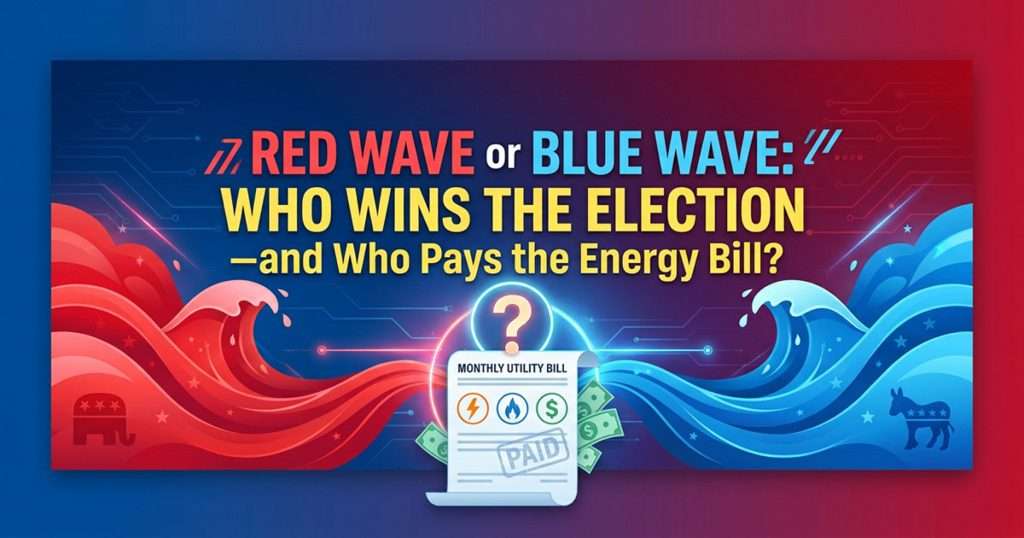
On November 3rd, Americans head to the polls to determine which party controls Congress. While Republicans and Democrats battle for political power, businesses across America face a different question: Will the election make my electricity and natural gas more or less expensive?
The answer isn’t as simple as red versus blue.
If Republicans Maintain Control
Republican energy policy generally emphasizes expanded domestic oil and natural gas production, reduced environmental regulations, and faster permitting for energy infrastructure.
Potential impact: Greater access to domestic natural gas supplies and expanded generating capacity could help moderate long-term energy costs. However, growing electricity demand, infrastructure expenses, and natural gas exports could offset those benefits.
If Democrats Gain Control
Democrats generally favor greater support for renewable energy, battery storage, energy efficiency, and environmental protections, alongside increased oversight of energy policy and utility costs.
Potential impact: Additional investment in renewable generation and storage could diversify electricity supplies and reduce exposure to volatile fossil fuel prices over time. However, regulatory compliance, infrastructure spending, and project-development costs could influence customer rates.
A divided Congress could also introduce legislative gridlock, potentially delaying energy infrastructure and regulatory decisions.
The Elephant in the Room: Electricity Demand
Regardless of who wins, America’s electricity grid faces enormous pressure from artificial intelligence, data centers, manufacturing expansion, and electrification.
Consider this: The U.S. Energy Information Administration projects that average wholesale electricity prices across 11 major trading hubs will reach $52 per megawatt-hour in 2026, an 11% increase over 2025.
Meanwhile, utilities must invest billions in generation, transmission, and distribution infrastructure to meet growing demand.
The debate isn’t simply about which energy sources we use. It’s increasingly about who pays for the infrastructure required to keep the lights on.
What Should Businesses Do?
Election results may influence future energy policy, but wholesale prices respond to more immediate fundamentals: weather, natural gas inventories, generation availability, transmission constraints, and consumer demand.
Rather than betting on Washington, businesses should evaluate their energy procurement strategies, contract expiration dates, and exposure to market volatility.
At Sterling Utility Management, our philosophy remains unchanged: Good energy management isn’t about predicting elections. It’s about understanding markets, managing risk, and controlling costs.
Whether Washington turns red, blue, or remains divided, your energy strategy should never be left to politics.
Take Control of Your Energy Costs
Concerned about what changing energy policies could mean for your 2027 operating budget?
Sterling Utility Management can evaluate your current energy contracts, market exposure, and procurement options to identify opportunities to reduce costs and manage risk.
Contact us today to schedule a complimentary energy strategy consultation. Because regardless of who wins in Washington, your bottom line deserves a winning strategy.